 Client portal


 Insights
Patentability in the age of artificial intelligence
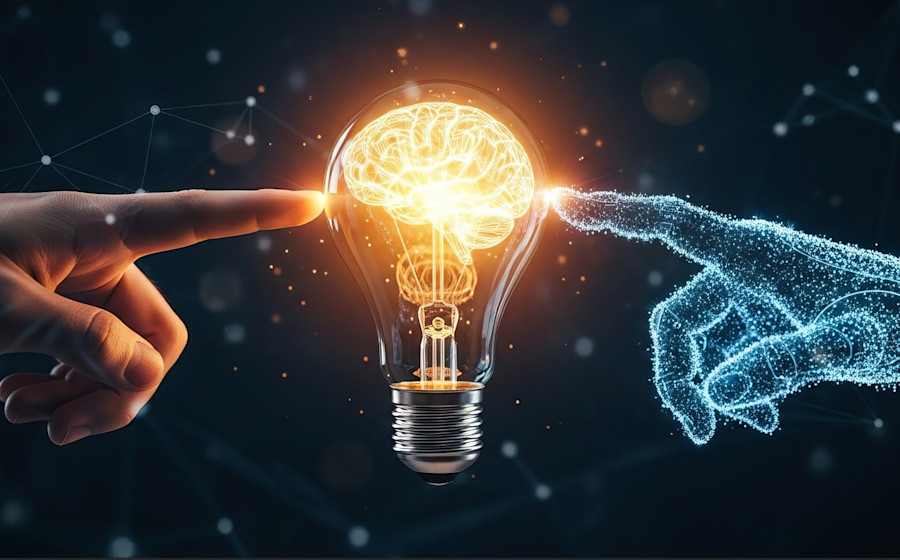
Artificial intelligence (AI) is increasingly used in research and product development. While it can accelerate innovation, its use also creates risks for patentability, particularly in relation to novelty and the requirement for a human inventor.
Novelty
To be patentable in Australia, an invention must be novel when compared to the prior art in the field. Generative AI produces outputs by drawing on existing datasets, meaning that identical or substantially similar solutions may be generated for multiple users who provide comparable prompts. Reliance on AI-generated outputs therefore increases the risk that the same invention may independently arise elsewhere or inadvertently replicate aspects of existing inventions, undermining novelty.
Novelty may also be compromised where AI models are trained on user inputs. Information entered by users relating to an invention (for example, a user who inputs outcomes of their own research for further analysis by an AI tool) may be reproduced in outputs presented to third party users of the AI tool and enter the public domain. This creates a risk that material may become part of the prior art even where the inventor has not directly disclosed the invention.
Human Inventor
The use of AI also complicates inventorship. Under Australian law, an inventor must be a natural person. While AI may be used as a tool to assist research or development, patent protection depends on identifying a human who has made a material contribution to the conception of the inventive idea. As AI takes on a more substantive role in invention, existing patent law may struggle to accommodate innovation that no longer fits neatly within human-centred inventorship concepts.
Conclusion
AI is changing the way we invent. While it offers significant advantages as a research and development tool, its use, particularly in the early stages of innovation, may undermine the patentability of inventions.
As generative AI becomes more embedded in innovation, it has the potential to disrupt the patent system and raise questions about its fitness for purpose. Careful management of AI use will therefore be critical to ensuring that patent protection is not inadvertently compromised.
All information on this site is of a general nature only and is not intended to be relied upon as, nor to be a substitute for, specific legal professional advice. No responsibility for the loss occasioned to any person acting on or refraining from action as a result of any material published can be accepted.
Key contacts







Share


