 Client portal


 Insights
To demolish or not to demolish: when the caravan does not fit
The recent decision in Stanley v EWH Constructions West Pty Ltd [2025] VSC 699 (Stanley v EWH) provides useful guidance on when demolition and rebuilding are not considered an appropriate measure of damages, even when the builder has failed to comply with the contract.
Overview
In Stanley v EWH, the Victorian Supreme Court examined whether complete demolition and rebuilding was an appropriate remedy for building work that does not comply with the plans. In this case, damages for demolition were not awarded, even in circumstances where the builder failed to follow the contract. The Court ultimately found that the cost of demolition was disproportionate to the benefit obtained.
Background
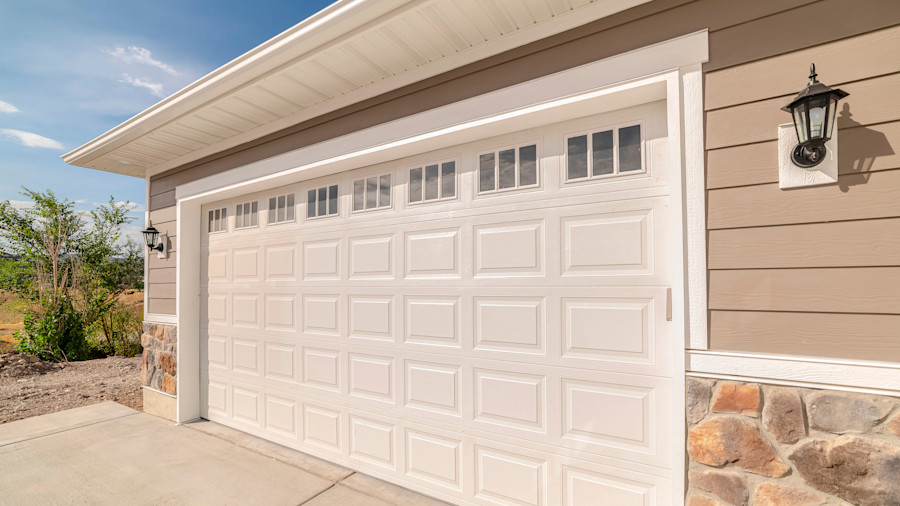
The Stanleys engaged EWH to build a residential house. Importantly, the Stanleys wanted a garage built to a specification that would allow them to move their caravan through it, so that it could be parked at the rear of the property. However, the garage floor was constructed lower than specified, preventing the caravan from being able to pass through the garage as intended.
At first instance, VCAT found that the builder had breached the building contract but declined to award rectification damages requiring demolition and rebuilding of the house. In this case, the rectification works were expected to exceed $650,000, despite the garage being structurally sound, not flood prone, and otherwise fully functional for ordinary vehicles.
The Stanleys appealed, arguing that pursuant to Bellgrove v Eldridge they were entitled to performance based damages measured by the cost of rectification.
The appeal
On appeal, the Supreme Court reaffirmed the principles articulated in Bellgrove v Eldridge (1954), namely that the ordinary measure of damages for defective building work is the cost of rectification necessary to bring the works into contractual conformity. However, the Court also noted that this measure is subject to an important qualification - rectification must be both necessary and reasonable, and what will be reasonable in the circumstance is a question of fact and evaluative judgment.
In applying Tabcorp Holdings Ltd v Bowen Investments Pty Ltd, the Court accepted that departure from the rule in Bellgrove occurs only in fairly exceptional circumstances. One such circumstance arises where the cost of rectification is out of proportion to the contractual benefit which would otherwise be obtained. After evaluating the options, the Court found that to demolish the fully functional (but not contractually compliant) house would be disproportionate, as between cost and benefit. The matter was then remitted to VCAT to assess damages for loss of amenity and inconvenience, in addition to caravan storage costs.
Why this decision matters
This decision is a timely reminder that:
- contractual non-compliance does not automatically entitle an owner to the cost of full rectification, particularly where the proposed works are excessive when compared to the practical impact of the defect.
- for builders, developers and insurers, the case highlights the continued importance of proportionality in building disputes. Even where a breach is established, courts will closely scrutinise whether the proposed rectification works are commercially and practically reasonable.
- for owners, the decision underscores the need to carefully consider the evidentiary basis for claiming the cost of full demolition, particularly where the building remains functional despite the defect.
Conclusion
Stanley v EWH confirms that while Bellgrove remains the starting point for assessing damages, courts will refuse demolition and rebuilding where rectification is disproportionate and will instead tailor compensation to address ongoing amenity loss and inconvenience.
All information on this site is of a general nature only and is not intended to be relied upon as, nor to be a substitute for, specific legal professional advice. No responsibility for the loss occasioned to any person acting on or refraining from action as a result of any material published can be accepted.


Share


