 Client portal


 Insights
AI, deepfakes and evidence in private client litigation
The courts have been grappling with the use of artificial intelligence (AI) in litigation as its adoption has accelerated in recent years. Practitioners who have filed material containing hallucinated references have been sanctioned by the judiciary, and several jurisdictions have now published formal guidelines regulating the intersection of AI and the law.
A 2025 UNSW report found 520 instances of generative AI misuse in legal proceedings across ten jurisdictions between January 2023 and September 2025, including 87 Australian cases, the majority of which involved self-represented litigants. While these cases have led to judicial frustration and court delays, they do not appear to have caused significant personal injustice or irrevocable damage to the parties involved in the legal proceedings.
What will happen when AI tools cause real damage?
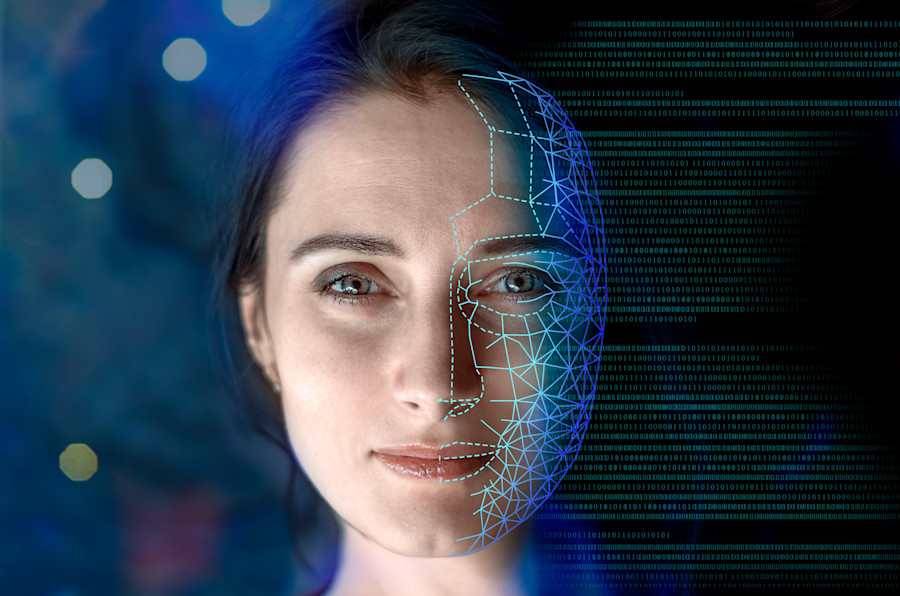
A deepfake is an AI-generated video, image or recording that convincingly emulates a person's appearance or voice. Deepfakes are created using advanced machine learning and make it appear that a person is saying or doing things they never actually did.
There are thousands of open-source platforms capable of generating deepfake content. This material can be produced easily, at little to no cost, and at scale. Lawyers and the courts need to consider the impact this may have on the way evidence is treated in litigation and the psychological and procedural burdens it may cause to individuals.
When digital evidence can no longer be taken at face value
The risk of fabricated evidence is not new. Litigants, practitioners and courts alike have historically encountered allegations of forged signatures, altered documents and manipulated records, and have relied on expert examinations, subpoenas and corroborating evidence to test their authenticity. The challenge today is that AI has made it easier, cheaper and more convincing than ever before. As synthetic content becomes increasingly realistic, distinguishing genuine evidence from sophisticated fabrications and deepfakes may become one of the defining evidentiary challenges in litigation in the years ahead.
Parties to private client litigation routinely annex text messages, photographs, screenshots, and social media posts to affidavits and tender them in court as inherently reliable evidence. The impact of deepfakes could destabilise confidence in this practice, given the ease of fabricating this type of media. Whether it is a voice-cloned family member, a recording purporting to capture a family violence incident, or a manipulated photograph supporting a substance abuse allegation, the consequences of synthetic media treated as evidence in a family law proceeding could be catastrophic.
Unfortunately, forensic detection of contested digital evidence can be difficult, time-consuming, and costly. It can involve compelling a party to produce native files, preserving metadata, and retaining experts to challenge sophisticated manipulation.
The responsibility of lawyers and the courts
The message from the courts when considering cases involving documents generated with AI input has been clear: that lawyers remain responsible for the accuracy, verification, and candour of material placed before the court. This principle can equally apply to lawyers who file digital evidence on behalf of their clients. In the matter of Valu, the Court found that filing submissions with non-existent case citations and fabricated quotations generated by an AI tool fell short of the professional duties of competence and diligence and the duty not to mislead the court, even where the conduct was not intentional.
Who bears the burden of proving authenticity?
It is prudent that lawyers and judicial officers understand what AI can create, what it can alter and how it can be detected. They should familiarise themselves with a variety of AI tools to appreciate the extent of the technology's capabilities. When meeting with clients for the first time, lawyers may consider enquiring about how their client interacts with and uses technology, to ensure they approach matters involving digital evidence with healthy scepticism. Lawyers should also consider how digital material was created, stored and transmitted, rather than assuming authenticity simply because it appears genuine. The goal is not to distrust all evidence, but to move away from treating digital evidence as inherently self-authenticating in today's environment.
Looking ahead, one of the more significant questions may be who bears the burden of proving authenticity in an era of increasingly convincing synthetic content. Unlike AI-generated legal citations, which can often be verified through existing research processes, detecting sophisticated deepfakes may require specialist forensic analysis. If greater scrutiny of digital evidence is required by the courts and practitioners, the cost and complexity of litigation could increase significantly. The challenge for the legal system will be to maintain confidence in the integrity of evidence without imposing verification requirements that make justice slower, more expensive and less accessible.
*(Valu v Minister for Immigration and Multicultural Affairs (No 2) [2025] FedCFamC2G 95)
All information on this site is of a general nature only and is not intended to be relied upon as, nor to be a substitute for, specific legal professional advice. No responsibility for the loss occasioned to any person acting on or refraining from action as a result of any material published can be accepted.
Authors





Key contacts





Share


